
Philip Gilbert
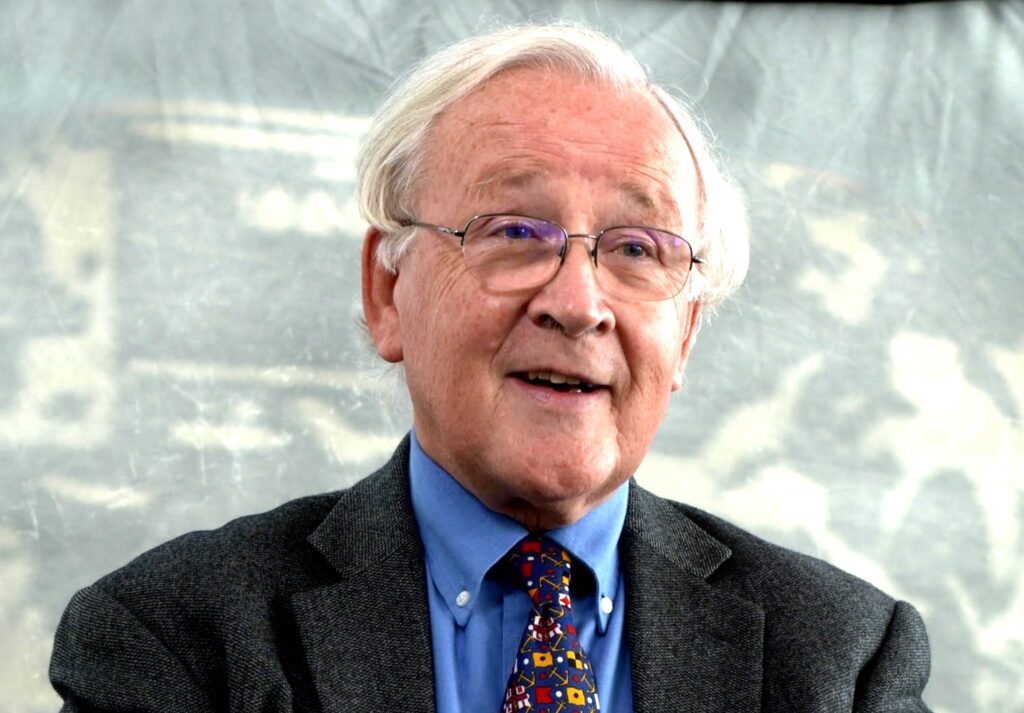
Family name: Gilbert
Work area/Craft/Role: Head Of Department, Producer, Television Director
Industry: Film
Company: BBC, Central TV
Websites: IMDb
Interview date(s): 19 October 2018
Interviewer(s): Mike Dick, Nick Gilbey
Production Media: video
Duration (mins): 97
Mike Dick 00:00
The copyright of this recording is vested in The British Entertainment History Project. The name of the interviewee is Philip Gilbert. The interviewer is Mike Dick, and the date is the 19th of October, 2018. Okay, Philip, can you can you say who you are and and what you what you do?
Philip Gilbert 00:18
Yes. Well, I'm Philip Gilbert, and I spent 40 years in broadcasting, all in television. Much of the time with the BBC. In fact, I worked twice for ITV, twice with the BBC. But the substantial time at the BBC was in production, making programmes outside broadcasts Almost exclusively, and having worked my way through that from a trainee production assistant when I joined the BBIB, I became a senior producer. Then left for a period, went to other parts of the BBC to Central Television, then invited back to the BBC to be head of the events department, which is where I'd spent most of my time making programmes.
Mike Dick 01:06
Lovely,. That's great. That's great. Tell me where, where, and when you were born.
Philip Gilbert 01:13
I was born in Winchester during the end of the war in 1942, and my family had been evacuated there, so my very earliest years were there. Then moved to Surrey, went to school in Surrey, and then on to school in Scotland. Before I went to Gordonston in Scotland, and then really due to my absolute interest in television, I went straight from school into television. So, unlike a lot of people, I didn't actually go to university, but that was partly because I knew from the age of 11 that I wanted to work in live television outside broadcasts, and that was inspired by the by the coronation. I
Mike Dick 02:02
was going to say, what are your earliest memories of television?
Philip Gilbert 02:06
The earliest really was being allowed to go to our neighbours in Surrey and watch the BBC black and white Saturday night variety show and and drama series, and then that led to to them kindly inviting all the neighbours to to see the coronation, and that's my biggest memory: the Coronation and the magic of live television bringing you some major event as it happened.
Mike Dick 02:37
Because that was the major major breakthrough in terms of you know sales of television. I mean, it went through the roof.
Philip Gilbert 02:42
It was yes. Can you
Mike Dick 02:43
describe the importance of of that sort of that that sort of period, that that event?
Philip Gilbert 02:48
Well, I think the the event, plainly with the the coronation of a new young queen, there was a lot of interest. It was just after the war. I think that also encouraged the public's interest. You know, here was the the start of something new, a new age with with a new monarch, and at the same time, television really was starting up again after the war, and this plainly had the potential to be extraordinarily big, as I'm sure people will have told you already, there was quite a lot of difficulty in getting agreement to televise, but it all happened in the end. I believe it was first of all Winston Churchill, as the Prime Minister, was not very keen on the idea, but a lot of lobbying took place by the BBC and I suspect others, and there was final agreement to televise the coronation, and that plainly led to a lot of people buying their very first television set, and I think then television really took off after the coronation. But of course, there was only one channel; there was just just the BBC until 1955, when when ITV came along as the first competitor.
Mike Dick 04:06
Well, just thinking back to my child, I was five when the coordination happened, and we didn't have TV hadn't hit Aberdeen at that point. So I went in the next week with my dad to see it in Pathy in Colour, which was just staggering. Yeah.
Philip Gilbert 04:19
Yes. Yes.
Mike Dick 04:20
So you knew at that sort of age that this is really what you wanted to do.
Philip Gilbert 04:27
Yes, I was very lucky. I mean, as I said, I was absolutely inspired by the magic of live telly, and so when I was 14, I knew I was much too young. But I wrote to the BBC and ITV and said, "What do I need to do to come and be a cameraman? Which is what I wanted to do first of all. And the BBC wrote back and said, "You've got to get an engineering degree. Then tell us, you know, come back to us later. And ITV said, "Well, come and have a look at one other studios, which was which was very decent of them. So I went up to the London ITV contractor, weekend contractor ATV, and started watching their shows. And I was very lucky as my school holidays went on for the next two or three years. Their production manager used to send me the the camera crew schedules for the for the four London studios, and I used to go along. I mean, I was an absolute groupie, but I was fascinated and loved going along and watching all this. So it just really reinforced my my determination to to work in television.
Mike Dick 05:37
There must have been gobsmacked as well with this young young young lad coming along was showing such amazing interest in the whole thing.
Philip Gilbert 05:44
Yes, it was sort of I suppose unusual because I didn't see anybody else doing the same sort of thing, but it just seemed a good idea at the time.
Mike Dick 05:55
Was there anything in your family background that would lead you into that sort of area?
Philip Gilbert 05:58
Very distantly, possibly, my grandfather was a professional photographer and an artist in sort of Edwardian times, but not my father because he was he was a sort of middle-ranking person working in the Bank of England in the city of London. He was also quite surprised about the decision to work in television.
Mike Dick 06:22
Is it something he he approved of then?
Philip Gilbert 06:25
I took him on a visit to ATV's Wood Green Studio, which was a television theatre, to show him the the top variety show, Saturday Night Show, and it was it was very entertaining show, and it was full of singers and lots of dancers. And you know, explaining to my father, this is really what I wanted to do, and pointed to the cameras on the floor and so on. And he said, "But there are all a lot of pansies, dear boy. I mean, and I had to explain that actually that that wasn't really an issue. It was about working in the business.
Mike Dick 07:04
So how did you get your first step in the ladder, and how did all that all happen?
Philip Gilbert 07:07
Well, when I when I left school, I wrote to ATV and specifically to the production manager, and it turned out he had just moved to Granada to run their London studio, so I was able to contact him, and I just said, "Look, are there going to be any vacancies? I'd really, really like to come and be a studio cameraman. And it turned out there was about to be a job offered, and there was one internal candidate, and I was allowed to apply, and I was very lucky. So I got I got the job as a trainee TV camera assistant, aged 18. So not on full pay, on lower union rate because I wasn't old enough. So I then joined Granada, who then had a London studio, and that was a television theatre as well.
Mike Dick 08:01
So, what would the job have consisted on with that when you first started?
Philip Gilbert 08:04
Well, there were six of us on the crew, and really, the early part of the job would be cable bashing, making sure cables were clear for the cameras to move in the studio, and then driving the Mol Richardson camera crane on variety shows, and then polishing lots of things, polishing the camera, quite a lot of maintenance we did, but it was basically just sort of assisting, helping, and then sometimes helping out a camera on a on a crabbing shot, you know, because all the cameras were on pedestals other than the crane, and the cameramen were actually perceived to be more adventurous in ITV then because they were younger, and I remember we did have a distant family friend, a director called Herbert Wise, and I remember meeting him once, and he said that he directed both at the BBC and ITV, and Herbert Wise said, you know he cut the camera movement by half when he was working with the BBC crew, but that was because those crews were much older; they'd been established longer, and we in ITV were very young, in fact.
Mike Dick 09:13
What sort of production series you've been working in? It
Philip Gilbert 09:15
was a varied mix. We were we were lucky actually. The output we did a current affairs early evening show on a Monday. We did a song and dance show on Tuesday called Song Parade. Then Wednesday we would do quite often a big show called Chelsea at Nine, which was a big network variety show. Thursday was usually a maintenance day, and Friday would be a sitcom, which might range from the army game, Bootsy and Snudge, Messmates, but broadly that was the mix. It was a bit of current affairs, and the rest was entertainment.
Mike Dick 09:51
Again, I guess just to sort of get a flavour of the sort of history, the time you know that ITV was relatively speaking in its infancy. Yeah. Talk about the sort of competition there was between BBC and ITV at that sort of during that period.
Philip Gilbert 10:06
I think the the BBC was seen as the established and and sort of slightly staid organisation. ITV, I think, saw itself as as more flexible, but I think we were aware. I mean, even in Granada, I mean, one of the big big four companies at the time, we were only part of a network, whereas you knew that when you looked at the BBC, that was one great whole entity with this vast range of programmes. So it was it was interesting to see, but plainly there was was competition, and we were always wanting to know what the audience figures were, and and we were very loyal to ITV and to our company particularly. And Grenada management were very clever in branding Granada as Granada from the north. So when you were in the north of England, you never talked about watching ITV. You watch Grenada, whereas in other regions, oh, it's ITV or the BBC. So they were very astute.
Mike Dick 11:08
So you moved you moved up up the line a little bit in terms of the camera.
Philip Gilbert 11:13
Yes, I moved up the crew a little way, so I became a proper, fully established cameraman and really enjoyed enjoyed that work, and virtually everything we did was either live or it was to early quad video tape, which wasn't able to be edited then. So I mean, everything we did effectively had to be right. But that was a very enjoyable period, and I'd actually started with Granada in 1960, but then in 1963 I really had the urge to to go into OBs. Grenada had a couple of OB units, but ITV tended just to do wrestling on Saturdays and the regional church service on Sundays. Grenada had two units, in fact, one up in the north and one in London, because what they did do was use an OB unit to to do a weekly show from the London Zoo with Desmond Morris called Zoo Time, and I I was allowed to go and work on that OB a couple of times, which reinforced the view that I'd really love to be outside and doing proper OBs.
Mike Dick 12:23
What was what was the difference then in terms of you know being an operator in a studio and being being on in an OB unit? What was the intrinsic difference? I think
Philip Gilbert 12:31
the the the difference is that with camera operation, you're using much longer focal length lenses, so big zooms or big static lenses. You are much more aware of the natural lighting conditions. You're with a crew, and the crew is a group of people who effectively are cut off from everybody else. Whereas in a studio, there's backup and and and so on. So, even at that stage, I was very aware of the of the kind of cohesiveness of an OB crew.
Mike Dick 13:04
So when did you join the BBC
Philip Gilbert 13:06
then? 1963. I actually applied to the BBC because I really wanted to get into OBs, and I applied early in that that year. And they said, "Well, we are going to be doing a big recruitment campaign later for the launch of BBC Two, and apply again then. So I applied, and then later that year, in the autumn of that year, after three interviews, I got to join BBC outside broadcasts on contract, a one-year contract as a trainee, what was called then a trainee production assistant, which effectively is a trainee assistant producer now.
Mike Dick 13:49
Describe your first day. You remember, you know, coming to the BBC for the first time.
Philip Gilbert 13:53
Very interesting first day because there was not only the big recruitment campaign, but there was a big training campaign. So I went straight into training on my first day, and suddenly we had everybody had an acronym. You know, nobody was known by name. It was all initials, and we were sort of organised in by the the trainers. Then I think were people who had moved into training after a career, so you rather felt that they they weren't necessarily absolutely top line current operators, and and so the feeling was actually civil service, I think, and and bureaucracy, and but it was also like going to a new school because there were about 30 of us on the training course.
Mike Dick 14:45
Where was that, Helm?
Philip Gilbert 14:45
That was in Woodstock Grove, which was in Shepherd's Bush. But it proved to be very good training, and during the course of it, we had a lot of guest lecturers. Who were top top line people? I remember particularly Clifford Hatt, who was head of design. I mean, brilliant talk about design, and there were others who did actually inspire us and make us understand exactly what we were getting into, and and actually the privilege of it, because with the BBC, everything you needed to make your programme was there. There was a department that did it, and all you needed was to know that and to find it, and it all made for really kind of cohesive programme making.
Mike Dick 15:28
Tell me about the BBC OB unit then at that at that point.
Philip Gilbert 15:32
At that time, of course, it was primarily based in London, with regional units in Manchester and the national regions, Scotland, Wales, and Northern Ireland, and there was a Bristol unit as well. Yeah, and they were Marconi units with three cameras, and the sort of OBs we did then were again an extraordinary wide range because there was a sort of feeling that studios did studios and OBs did almost anything that happened out of doors, so it really did range from all the all the sort of categories of sport you can think of to theatre excerpts to dance shows to museum programmes. Then, of course the big national events, the the annual events like Trooping the Colour, the Remembrance Sunday service from Cenotaph, the Festival of Remembrance the night before that, and various others. And at that time, the the daytime schedules were pretty empty. There was a lot of test guard showing during the day, and so if some bright idea came along, or if in those days the Queen or the Queen Mum was going to go and open a bridge or or visit a museum, and there was an OB unit available, then we would go and go out and do that. And of course, all these things were live, and it was amazing what could be done with the three cameras, and every so often it wasn't always the three cameras. Sometimes it would be less if something failed. But talk
Mike Dick 17:10
about the adrenaline that you must, you know, working in that kind of live environment.
Philip Gilbert 17:16
Yeah, I mean there was a lot of adrenaline. It was exciting, and there was also before you went on air a sort of level of dread because you knew that you were going live. And certainly as the years went down, I remember when I was directing the sort of the national events myself, and we were doing it all in colour and we had a lot more cameras. Just before you go on the air, you do think I've got to get this right, I mustn't let down the people who are watching, and certainly I mustn't let down the crew, because what you had with the BBC crews was a most extraordinary support and cooperation, and it was sometimes you thought you felt a bit humbled that all these people were now here together to make this thing work the way you had seen it working, and then you're now directing it live, and it's happening.
Mike Dick 18:09
So when you came to the the OB unit, I mean, who was who was who was in charge at that point?
Philip Gilbert 18:14
Peter Dimick was the general manager of Outside Broadcast, and in those days, that actually also encompassed the control of the outside broadcast units, so it really was a considerable fiefdom. Really,
Mike Dick 18:29
tell me about Peter Dickinson.
Philip Gilbert 18:30
Very charming man, very able. I mean, he was both a broadcaster in the sense he presented tele sports programmes, but also as head of the outside broadcasts, he was responsible for the BBC's coverage of live major events, and he was also an extremely good negotiator for sports contracts, because of course in the early days when it was just the BBC, the BBC was in a strong negotiating position, and also the there was a culture then within a lot of organisations that television is new, it could do us good, and there was a lot of cooperation from from all sorts of different organisations who welcome television. Well, I think the virtually all the major sport. I mean, Wimbledon particularly, and the relationship between BBC and Wimbledon exists to this day. And the BBC is the preferred broadcaster. It's the only chosen broadcaster that's allowed to go and do the the Wimbledon Championships. They supply the rest of the world. The BBC doesn't have the rights to other territories, which which they once might have done. But that that was a good example. But other times when we were doing programmes, I remember we wanted to do a programme. From the top of the post office tower when it was inaugurated, and you ring the authorities, and they're very interested and welcome you. Then, but as the years went on, they became a bit more cheery, and I do remember that once we I rang a location and said, "Oh, with the BBC, we'd like to come and do so and so. They said, "I'm sorry, we're not having you. We've just had BBC Current Affairs here. We're not going to have the BBC again. So, in outside broadcast, we did cultivate our relationships with a lot of a lot of outside bodies, and that that long-term relationship was crucial to televising the major national events, and it's the relationship with Buckingham Palace and with the London district, the headquarters of the Guards division in London, and one or two of the other sort of government organisations, the what is now the DCMS, who provided a lot of outside broadcast camera towers and so on, on on these state occasions. So, so those relationships were very important.
Mike Dick 21:13
I'm quite interested at this point to really kind of get a sense of the history of of you know the the outside broadcast unit. I mean, was was Dick Mc really the you know the visionary at the time, or was was it was it before before Dick came on the
Philip Gilbert 21:28
scene? No, I think I think before that it was there was a guy called Labinier, and he was he was he was very through and through, strong, good BBC, shrewd person, and he really developed outside broadcast initially. I would say, and then he he was overall in charge of the coronation. Then Peter was the the producer running it and directing the Abbey. So I'd say in my time, Peter had considerable control of the fiefdom, and he had three departments within outside broadcast, three production departments. There was sport, who were the major one, and I think the one he was most interested in. There was events and entertainment, which is where I was, and the which did the national events, and a lot of other stuff. And then there was science and features, which chap called Aubrey Singer used to run, and that, in a sense, was more like a feature and documentary department, so it used live live outside broadcast cameras at times. But but it seemed in some ways that it would be better as a as a as a film department of its own and separated off. And ultimately, it was it was separated off. So by the time I left, there were the two departments: sport and events. The entertainment bit was taken off our title because of a certain rivalry with light entertainment and Bill Cotton, who was head of light entertainment. His mantra was: "If anybody's going to do light entertainment on the BBC, it's light entertainment department. It's not outside broadcast.
Mike Dick 23:23
So to go back to your sort of early days in the in the department, tell me how how you how you progressed.
Philip Gilbert 23:28
When I came in in 1963, having done the training course, I was attached to one of the two executive producers in events and entertainment, and that was a chap called Anthony Craxton, and he was also called the royal producer because he did the Queen's Christmas broadcast and he did all the royal events, and he was an extremely capable, able, and wide-ranging sort of producer director. And in my early days there, I found a file in the filing cabinet called Operation Hope Not, and it turned out this was the plan for Churchill's funeral. So I sort of determined in my mind I would stay working if I could for Anthony at least until the Churchill funeral had happened, and at that stage in 1963, it had been in planning for something like seven years, and the BBC had already asked the the General Post Office to instal all the sound and vision circuits into the crypt of St Paul's, so that one day that's where the the master control room would be for the funeral. And anyway, I got very absorbed by the the Churchill plan, and I was lucky, so I stayed being trained as an assistant producer with Anthony, working on his annual event shows and so on. And then in 1966, I became a producer in the department, but I stayed working then as his number two producer. And what
Mike Dick 25:01
sort of productions are we doing?
Philip Gilbert 25:02
Well, bearing in mind, I was assisting him and not not doing them in the early stage. But I mean, he would be doing Remembrance Sunday at the Cenotaph, Last Night at the Proms, other classical concerts, more or less. Oh, Test match cricket and the rugby internationals. In fact, I was allowed my first directing opportunity by him, directing two cameras at the university at the Oxford Cambridge rugby match one one autumn. And but then you see, thinking about that, two cameras, whereas now something like 20 and all the slow mo's, but Anthony allowed me to do that. So those are the sort of thing. He at that time, if the producer had the talent to do any of these things, then the producer did them, and there was no question saying, well, he can't do sport because he's in events. That no, he was an extremely good cricket director, as well as a rugby director. So I was assisting with those.
Mike Dick 26:08
What sort of the technical issues you were having to grapple with at that sort of period?
Philip Gilbert 26:13
Oh, I think reliability, communications, more the bigger complex OBs just hooking OB units together, and really the weight of the cameras, the the the massive nature of the rig, and and probably the limit of the number of cameras. We had three cameras, but the outside broadcast department had control of planning the units, and there was a spare camera. So, if we were very lucky and it wasn't being used by somebody else, we could ask, could we have the fourth camera? And then we were really in clover with four black and white cameras.
Mike Dick 26:57
So, when some Wilson finally did did die. I mean, what what that was that's my major memory of it. Yes, you know, I was really aware of outside broadcast. Yes, major major. Yeah, you know, event at that point. And describe the the preparation and and how how that that was worked out.
Philip Gilbert 27:15
Well, for a number of years before he died, there would be an annual meeting, very discreet meeting, and it would be chaired by the Duke of Norfolk, who was responsible for the ceremonial, and it would update the the plan. I mean, basically the plan was pretty straightforward. It was massive, but the plan didn't change much. Occasionally, though, we did get a changed service order, and we we were told that Wilson had changed his mind on the hymns. I don't know if that was true or not, but we did actually have a full service order without the date printed on it before he died. What was also clear was that we knew we were in competition with ITV, who were going to cover this whole event live as well. So there were a number of meetings with them and us agreeing camera positions, and those were quite competitive meetings, I would say. And there's a certain wish by both sides to try and keep elements of what they're doing secret, so that the meetings were sort of very important, but not much publicised. Then, as we realised he was becoming quite seriously ill, there was a warning that they weren't sure how much longer he was going to live. So when the illness occurred in early January in 1965, he was living in Hyde Park Gate, and both we and Rediffusion, the London ITV company, put OB trucks outside the house, and followed. They became live news units. They followed the progress or otherwise of his health, and then it became more and more clear that he didn't have very much longer to live. And the BBC, the outside broadcast department at Kendall Avenue, knew that the scale of the outside broadcast rig was such that we wouldn't be able to get it in in time for a live transmission unless we started putting it in before he died. So very quietly, we started rigging St Paul's, and St Paul's was to be the master control room for the other London OB units feeding into it, and it had six cameras inside and four cameras outside, so it was a pretty crucial rig. And of course, then we needed substantial amount of lighting, so there was a big lighting rig to go in as well. And then finally, when he died. We really got everything in place. It meant using all the BBC OB units, including everything from the regions, and virtually everything we had. And we used in the order of 30 black and white cameras for that. And the first thing that we had to do, in fact, was to to cover his lying in state down in Westminster Hall, so we put a three-camera unit into that, and then the Archbishop of Canterbury came and did a tribute piece, and Richard Dimbleby, our number one commentator, did a piece the following evening, and then that unit moved its cameras to the outside, ready for the funeral procession. We also knew that the there was a long gap between death and and the funeral, not necessarily helpful to us because of the nature of our rig. But in fact, one of the reasons for it was the need to get a lot of military units from different parts of the world and VIP people from the Commonwealth and so on over to London for the funeral. Then the final decision was to do it on a Saturday because the nature of the disturbance to London traffic and also this enabled more people to be able to be free from work to come and stand on the you know along the funeral route. Then, just before the in the days before the actual funeral, there were two full rehearsals, and this was I have this in my mind now, all these years later, because it was at 3o'clock in the morning that the first funeral procession rehearsal was to take place. That was from Westminster Abbey, so Westminster Hall to St Paul's Cathedral, and we were standing there.
Philip Gilbert 32:00
Anthony Craxton, Richard Dumbleby, and myself on the steps of St Paul's, pitch dark, gentle snow, and then in the distance we heard the single beat of a bass drum, and then out of the darkness, four RAF servicemen appeared with big tapes between them, and they were to indicate that was a unit of troops, and gradually more and more these came past, and then the gun carriage arrived, and then the coffin was lifted off by the bearer party, and there was considerable struggling to get it up the steps, and they got it up the steps, and they were in full uniform. The Earl Marshal, the Duke of Norfolk, was watching and timing this, and the troops were given the order to lower the coffin. They were then allowed. They were given the order to smoke. So they all lit up their cigarettes with great relief. And what had caused the difficulty, and actually it showed on the day, was that because Sir Wynston was to be buried on the day of the funeral, he was in a lead-lined coffin, so they had the weight of the coffin, the lead, and the body, and it was extremely heavy. The other thing I remember on those steps was that the Earl Marshal was was not a happy man because the procession was three minutes late, overrun by three minutes, and then a couple of mornings later there was a river procession. The body was to be taken from Tower Pier to Festival pier on a Port of London Authority launch, and the launch had been kept in mothballs for the event, and that was rehearsed early in the morning, and we were really quite upset in outside broadcasts because the news organisations got wind of this, and they actually shot some news footage, and we felt that was totally below the belt at the time. It was totally inappropriate, but anyway, that was the second rehearsal.
Mike Dick 34:11
What was what was your role then? You know, how did you you know prepare and plan for for for the for the funeral?
Philip Gilbert 34:17
Well, in the just briefly in the preceding years, I'd been working with Anton, and I found some additional camera positions on the route because gradually we we fleshed out the route more. On the day, my role really was assisting him, and then looking after President Eisenhower, who was over for the funeral, and we had asked him to to leave St Paul's after the funeral service and come down to the crypt and do a a tribute piece, and we also had Sir Robert Menzies the Australian Australian Prime Minister, and we we did the same thing. So so I looked after them. And then I was there as a general helper, but one thing we we did do we needed an American flag on a rooftop as a visual link into President Eisenhower, and the idea was that he would speak over the river procession, so we needed a flagpole on a roof of a building overlooking the river. So one of my tasks was to get from the props department an American flag and a flagpole and fix it up on the roof of Unilever House. So on the day, this sole American flag, I'm afraid to have to say, was there courtesy of the BBC?
Mike Dick 35:43
Love it, because I think these are these are major, major TV events. You know, irrespective of the you know the the cultural and the you know the importance in terms of British life. But I think in terms of TV industry, I think these are very, very important. And Emily says we do these things incredibly well. I mean, what what what's the essence of that? Would you say?
Philip Gilbert 36:06
I think we do do the the events extremely well. I think it's it's within the culture, but I think a crucial part, not to be underestimated, is the the guards the guards' division. London District, because they are responsible for all the military ceremonial, and their precision is is second to none, as is Buckingham Palace. So I mean, we start from a very strong position of having very very clear good organisers, And also, they've got very very good records of how things have been done, things that need to be be remembered. And then the important thing that follows on from that is a strong relationship between the BBC and those organisers. And sometimes we were able over the years to suggest things quietly to the palace or to London District, or even request that something might be delayed a little bit so that we'd be able to see the previous item happening in one place and then go to somewhere else to see that the next part of the of the event develop. And I remember over doing trooping the colour for a number of years. There's a longer at the end while we had to wait for the Queen Mother to leave and go in a carriage procession to Trafalgar Square and along the Mall before the troops could march along the Mall. So we then suggested activity that could take place on horse guards, and we did this dealing with the the commanding officer of the guards division. Pointed out to him the problem, and they were very good because they wanted to make sure that trooping looked as good and as interesting as it could on television. So so that was the the end of the trooping was was was altered to to keep the flow going and to help television, and and over the years we did really quite a lot of that.
Mike Dick 38:13
So your relationship with with Anthony can continue. Tell me tell me a bit about Anthony. What his his personal attributes were, would you say?
Philip Gilbert 38:21
Ant Antony came from a musical family. He was very intellectual. He was very charming. He was very calm. He had the ability to instantly just get a natural respect from the crews who wanted to do the absolute best for him, and I very much saw that happening. He was good enough to encourage me as his his assistant producer, and accept ideas that that that I put forward. You know, to for the for the coverage of things. He was very good at directing classical music concerts, but also had an extraordinarily good ability to direct cricket and football-not football, sorry-and to direct rugby, and also to come up with with quite inventive programme ideas, but he his overall thing was extraordinary charm and and calmness,
Mike Dick 39:32
which is absolutely vital. Yes, yes.
Philip Gilbert 39:35
He he he was he was never a director to shout. He never once in all my years, raised his voice in the scanner.
Mike Dick 39:43
Because you went down to become a vision mixer with with Anthony. Is that
Philip Gilbert 39:47
I vision mixed one show for him? Anthony directed the Prince of Wales Investiture. He was the executive producer and director for that, and. Up to that time, normally the OB producer director would vision mix his own cameras, and that was fine with sort of three or four cameras and so on. But as as we developed the the technique of having one central control room bringing in other OB units and also increasing the local cameras, the number of local cameras, it became really quite complex to vision mix and direct all this stuff. So we didn't use vision mixers in outside broadcast, but as his assistant, well, I was a producer by then, but I was very happy to vision mix the the investiture for him, and we did that in a big de-rigged control room outside Carnarvon Castle in a big hut.
Mike Dick 40:54
Because also colour had come in by that that point as well. It
Philip Gilbert 40:56
had colour that. That was the the the first major colour outside broadcast. It was still in the early days, so we were talking about 1967, I think it was. Oh, 69. So we yeah, that was in the early days of the colour. So we're talking about 1969, and we didn't have very many colour OB units, but there were some other colour cameras being delivered to the BBC, and the outside broadcast technical side of the house managed to to pull together 28 colour cameras. So, in terms of complexity, it was certainly the biggest colour outside broadcast, and just slightly less in the number of cameras than the Churchill funeral had been, but very complex because we were we were up in North Wales, and everything had to be shipped up to there. And whereas in London there's rather more backup, and the communication distances, the microwave distances are much shorter in London, but in Carnarvon there are there are added added things to to make it make it complex.
Mike Dick 42:10
Because you talk you talk about the number of units and the number of cameras. What give me you've got a rough idea of how many you know personnel would be involved in a project like that, for example.
Philip Gilbert 42:21
Let's think. Well, with 28 cameras, probably somewhere in the order of 100, maybe more. I mean, that's a that's more of a technical question for an engineering manager. But I mean, broadly speaking, you know, if you work on the basis of four or six cameras on an outside broadcast unit, vision engineers, sound engineers, engineering managers, lighting directors, communications engineers, mobile videotape engineers, and editors. Put all that together, all on the location, and that's an awful lot. And the rigger drivers who are absolutely crucial to it all, because if the rigger drivers don't get the trucks in the right place and the cables in the right place, then you're on a hiding to nothing. Because
Mike Dick 43:08
this is the thing behind the scenes that people, you know, viewers don't appreciate: is the kind of you know the teamwork that goes on, the kind of logistics that go on. You know, it's quite quite quite staggering, and you're obviously very much at the sort of sharp end of that at something at that point. Again, can you describe you know the planning that goes into a big event like that as a note with OB unit?
Philip Gilbert 43:31
Yeah, I just had a drop of water. Yeah,
Mike Dick 43:32
sure. So right.
Philip Gilbert 43:38
This is good. Yeah. Yes, I mean, planning a big event. The very basics are that you persuade the channel controller that he needs to take this event live on his channel, and then you're dealing with the organisers of the event if it is one of the the royal events, you are then directly in touch with Buckingham Palace and other key players, which could be Westminster Abbey, and it could be the the Household Division, London District, who the people who will provide the the the processions. You then are in touch with the local authority, the Westminster Council, with the police, very often with security departments, and then you begin to plan where you need to put the cameras on your ceremonial route and in the buildings you're thinking of, you very often have to seek permission, local permission for that. So local councils might need to agree to that, or the owner of a building if you want a camera on their roof. And then crucial to all this is where you park the big outside broadcast trucks. So all that has to go into the planning, and then as you get nearer, you get as much detail as you can of what will happen within the event, and you begin to write a a running order, a timed order of when things will happen, and then you develop that into you hope a camera script, which tells you in more and more detail what will happen. And if you're doing something that's fairly going to be fairly predictable once it starts, like a church service, you can actually write on your camera script which camera is going to take which shot when. A lot of stuff is directed, as as they say, ad lib. So sometimes in your camera script, you'll have a big section. It just says ad lib, or it says as directed, and that's the time when the director is looking at the the preview screens, calling the shots, taking them, and literally making it up as he goes along, and the most important thing that the director is worried about is that if he has all the detail of what should happen, that the event does unfold the way the organisers say it will, because if it then goes pear-shaped, then the director is really earning his money if he's following something going going off off off plan, as it were, so that's that's broadly how how it all works. And then once you've done the transmission, you're in a position where you are formally thanking all the organisations who have helped you and worked for you, or with you, and you're also paying quite a lot of formal fees, because there are fees to be paid working in Westland Strabby. There are union fees to be paid to musicians, to choir boys. Almost all performers have get paid a fee once the event has all happened, and then in the BBC terms, the final final bit is that every Wednesday there used to be a meeting called Programme Review, and at that meeting, all the heads of departments and the two then two channel controllers and the director of television would get together and would discuss in front of the head of department who just made the programme what they thought, but that that's that's how it works, and and in the end it boils down to detail.
Mike Dick 47:32
So what kind of feedback would you get for something like the you know the investiture of Prince Charles?
Philip Gilbert 47:39
I think it would be whether the event was captured well, whether the story was told well through commentary, how strong the commentators were, whether the right information was given, because in outside broadcast events, in my view, the commentary is 50% of it, and the pictures of the other 50% because without the story being told very clearly and narrated, however good the pictures are, the viewer doesn't get involved and understand the whole process of what they're watching.
Mike Dick 48:18
Again, looking at some of the the other programmes that you would have been responsible for producing at that point. I mean, give me some idea of the range of some of the other productions you'd work on at that point.
Philip Gilbert 48:31
Well, over the years, the the first thing that I was allowed to to be involved with was suggesting that for the Remembrance Sunday service you have a second location, and you contrast the the the ceremony in London with a little village where everyone knows the names on the war memorial and who they were. But moving on from that, there was It's a Knockout, which was an inter-town extraordinary games competition, which was strictly called entertainment. But it then developed into a Europe-wide version called Jesson Frontier, and so I used to direct the UK end of that. At similar time, we had television top of the form, which was children's quiz shows using two separate schools with an OB unit at each, and then we did an experimental one with Australia, whereby we had an Australian OB unit in Sydney and ours in London, and we did a sound link-up, recording the output of the two OB units at each end, and then we did an amazing edit to put it all together. Then a little bit later, there were quite a lot of dancing shows, the UK Dance Championships, and so on, because they were of much more. Interest at the time, and then in 1975, totally at a tangent, I saw a sheepdog trial up in the north of England when I was on holiday, and being a sort of instinctive television director, I watched it, thought that is fascinating, and then I thought, now if you're going to try and do that on the telly, how would you do it? And then that came. I thought about it more and did some research and discovered that there was actually going to be a big UK-wide competition. So I got in touch with the authorities, went and watched that, and then as a result, thought well we could do a sheepdog trial programme, and so I did a programme submission through my head of department to BBC Two, and that was Aubrey Singer, and we offered Aubrey a one-off sheepdog trial or a series of eight, and bless him, he opted for the series of eight. So we then thought, my God, what do we do now? And then had to put that in place, and that was very interesting because the crucial thing was getting enough top dog handlers, and the the sheepdog organisation, there's one similar to Cruft, but it's called the International Sheepdog Society. They were very reticent about getting involved with television, and thanks to their the secretary of their organisation, who was much more forward looking, thought no, must do it. So we then found a suitable guide, one of the Sheepdog Society experts, because we needed a really expert commentator, and then we also needed a television presenter. And I didn't want to go for the usual outside broadcast thing of having one of the well-known can do them, you know. Jack Baldry is, you know, after none sort of presenter. So we took a risk on Phil Drabble, who was basically a countryman and and made some films, and he was an author. So we had those two in place, and then choosing the location was crucial. So I went for the Lake District on the basis that if they don't like the dogs, they'll like the scenery, and then we got put in place the the top handlers, and there are other technical issues which were very important there, and that was getting the outside broadcast trucks to the location, and in order to get to the chosen place in Buttermere, we had to get the the Manchester engineering manager and the rigger drivers to make a a physical wooden jig, which was the length of the scanner chassis, and they took it to the Lake District, and they had to see if it would go over the bumps in the road to our location, and luckily it did. So come the day we had a police escort, and this fleet of trucks arrived. But another important thing to us was not to have traffic noise, not to have an adjacent railway line, not to have any flights overflying it. So we then got all this in place, and the first programme happened in the in the autumn of September, 1975.
Philip Gilbert 53:31
It got transmitted in spring 76, and on BBC Two on Tuesday nights at about 8:30, and suddenly it picked up an audience, surprised us all. So we were delighted. So by the third programme in, and we were still editing the rest of the series, we got commissioned for another series, and then it went on from there, and then it went on for 30 years, effectively in in my duration, one way or the other, and it's still running as of now, 2018. But it's absorbed in the the country programme on on Sunday nights.
Mike Dick 54:13
You haven't mentioned the name of the series.
Philip Gilbert 54:15
One man and his dog.
Mike Dick 54:18
Actually, funnily enough, I've actually found an interesting. I don't know if whether hopefully it'll be a memory jogger from 1975 as well, which you produce was a question of Europe, and I just thought was very appropriate. Do you remember that? It was Robin Day was you know in the chair. They had Ludo Kennedy as well, and the whole range of Barbara Castle, Jeremy Thorpe, Edward Heath, David Dimple. I think it
Philip Gilbert 54:48
was it was one of those jobs where we were actually doing it for Current Affairs. Right. And and to be honest, I don't remember that very well. Right. But what I do remember was that there was. A great political push at the time, and Edward Heath was the prime minister, and we did a sort of celebratory programme. A reason how it got conceived, I have no idea, but it was a big fashion show, and it was called Fanfare for Europe, and it happened much at the same time as the programme you just allude to, and so we we were we were plainly without knowing it promoting going into Europe at the time. I thought it
Mike Dick 55:30
was very appropriate. Yeah, time we're living through at the moment. Time will tell. Time will tell. Anyway, in 1980, I think it was you. You moved to programme planning,
Philip Gilbert 55:41
1978. Yes, yes. I'd been producing or directing OBs from 1963 to 78. I was a senior producer in the events department then, and really it had been pretty relentless because there were periods when doing a lot of big programmes all at once. I mean, I remember doing the Old Man of Hoy, and in the same time doing It's a Knockout and Joh San Frontiere and something else in the same year. And so I was just getting a bit tired. Needed a change, and a very astute person running BBC's programme planning suggested I go there for a three-month attachment just for a change, and so I did this. And I was working with Brian Wenham planning BBC Two schedules, and then at that time the BBC management changed the whole programme planning structure, and they wanted to have planners for the transmissions and planners for the resources, so that you could match the resources more clearly to the transmission requirements. So I became a programme planner, programme resource planner, and that led to me having a very detailed knowledge of the studios and what they were capable of doing, because we had 15, 15 studios and 17 OB units, and our problem was Lime Grove Studios because there were two studios there, but they couldn't really be used for very much, because you couldn't take scenery down there overnight, and it was a residential area, and the studios were on the fourth floor, so they're very awkward. But when the BBC flirted with breakfast television, the solution seemed to be to set it up in Lime Grove. So, and I'd been pushing this as a solution. So I was then told, well, we'd like you now to become general operation, general manager operations and services at Lime Grove. Set it up as an independent centre to do breakfast television and other current affairs.
Mike Dick 57:52
Nationwide was there.
Philip Gilbert 57:53
Nationwide was just coming to an end. Yeah, and then an ill-fated programme called 60 Minutes came on, and that meant that once we launched Breakfast Television, we used one studio for for breakfast time, and in the afternoon it then did the regional news element of 60 Minutes, and then the other studio would do the money programme, And eventually, eventually news night. But it was it was a crucial time for the BBC because we didn't have much time to set it up, and we had to do it in terms of pride and practicality before ITV got to air.
Mike Dick 58:37
I was going to ask why. Yes.
Philip Gilbert 58:38
Yeah. So I mean, there were, I think, two reasons that the decision was made to go into breakfast television. One, perhaps not that strong a one if you're not part of the BBC, but it was if ITV is going to be there on air at that time with the breakfast show, then the BBC certainly has to be. But a more important thing was that a lot of news came in by satellite from the United States and indeed from from Australasia overnight, and that material would then be available for the breakfast news programme. If you didn't have a breakfast news programme, you didn't get that material in, and your lunchtime news may or may not get it. Whereas once you bring it in overnight for breakfast news, you've got a lot more stuff and choice for for lunchtime news. So it actually strengthened the news gathering for for BBC News, even though we were not actually part of BBC News. So so so I mean those two reasons were important, and the other thing, great success and great compliment to Ron Neal, the editor of BBC Breakfast Time, is he structured the show with absolutely the right ingredients, and Ron had been one of the many people editing. Nationwide over the years, and there were quite a lot of nationwide elements in it. Whereas the the TVAM opposition version was rather more placing itself rather more up market with the mission to explain, and its problem was it had five key personalities as presenters and investors, and there was no strong editorial drive for the sort of programme that you needed at that time of day. So, so actually, we beat them hands down in audience terms for a considerable time.
Mike Dick 1:00:39
Because you developed the you know the facility at Lime Grove, as I remember, you know that really really did develop it at that that sort of time. Yeah. What did you introduce there?
Philip Gilbert 1:00:50
The it was essential to develop Lime Grove into a studio that could handle two hours or two and a half hours live early in the morning, and to handle particularly graphics and be responsive at short notice, so we determined that the only way to do that was to go for electronic graphics. So we were the first organisation to use a paint box, Quantel Paintbox, and we used it live. And it used to first of all, do our live weather sequences, and literally will be changing and animating on air. But it was also used for a huge amount of visual material, together with a with an anchor caption generator. But another crucial thing to breakfast timing and getting it on air for that length of time was to be the introduction of the first newsroom computer system. So we were the first people in the UK to write scripts on computer and deliver them to Water Queue on computer and around the building and so on electronically. And that we couldn't have done it without that, and then adding on to that, we also we we did a lot of separate union negotiations because we set ourselves up as an independent separate centre. So we had a much smaller scene crew, we had specialist lighting crews who alternated between studios and location, and we had the first single camera electronic units similar to ENG, but in terms of of the BBC operation, they were called PSC, and then we had our own communications truck to go with that, which again was separate from anything outside broadcasted, so so we had our comms vehicle, and so we could do live single cameras into into breakfast time. All those things were new and essential, and the only way all that was made possible was that the BBC, really at Mike Checkland's request. and under his guidance and push, we circumvented a huge amount of the BBC bureaucracy and systems to get stuff in place, because we also had to do a lot of building work in Lime Grove built a whole new mezzanine floor, a triple format videotape area with the graphics, multiplexer desk to feed all this stuff live up to the gallery as it all happened, all specialist stuff. So a lot of money went in, and a specialist production office again as close as possible to the the studio, so a lot of work, a lot of money, and and a lot of support.
Mike Dick 1:03:46
I can imagine. I mean, knowing Grove as it was, you know, yeah, yeah, absolutely. Then made a move to ITV.
Philip Gilbert 1:03:54
Yeah, the the history of that was that because of all the the the new technology and systems we were using. We were really of quite a lot of interest to a lot of broadcasters, and we we had a number of visits from broadcasters from many countries around the world, and one of them was actually the director of operations from Central ITV up in Birmingham, and we used to show show our guests the gallery and the programme as it was happening, and then they would be taken in for a nice cooked English breakfast in our hospitality room. And Peter Gardner, the director of operations at Central, said, "Well, thank you for showing me this. We've got our new studios at Nottingham. Would you like to come and see those? We'll do a return match. So I was invited up there and met Peter there, and he said, "Oh, can you come across to Birmingham as well? Because Bob Phillips, the managing director, would like to meet you. And then there was a job proposition offered, and my feeling was that I'm like a television producer. I'm more of a project. Person than just a continuing on the same route sort of manager. So having set up Lime Grove and run it for a few years, I thought I could do with a change. So when they suggested it, it was the opportunity to work in commercial television and just see how all that worked at a management level, because it's so different from from the BBC. So I accepted the job and became a controller of programme services for them, up in Birmingham, responsible for all the producers, directors, researchers, freelance producers, the programme planning, the casting department, and so on. So I did that for a number of years, and then in fact Central separated off its programme making division from its studios, precursor to what BBC did really, and I became general manager Central Productions, but at that time, the government legislation was such that when the ITV franchise renewal came about in 1990-ish, no longer did the ITV companies have to have studio centres, and they were also, of course, at that time going to be obliged to take 25% of production from independents, which meant all my producers and directors now were rather less needed. So my not very positive role was to have to make a lot of people redundant, and then it became clear to me, and I said to the board that I'm sorry, I don't see that we can justify a general manager central productions if I've got not enough to manage. So, so effectively, I said, you know, I felt my job was no longer tenable, and then I was very lucky that Sir Paul Fox at the Beeb said because we'd worked together years back, would I come back to the BBC to head up the events department on condition I came back and did that for two years? After which I could go to any other part of the BBC I wanted, and in fact I then returned to the BBC in 1990 and remained there as head of events till 1998, when I left, retired from the BBC and set up a consultancy for a couple of years, just in order to make sure I worked on the Millennium programme on Millennium Night.
Mike Dick 1:07:36
There's one. There's one event. I'm just constant time at the moment. Yeah, we're drawing to the the end. I mean, obviously, Princess Diana's you know funeral. I mean, obviously that was the probably the largest event of that of that sort of era. I was just you know interested in in you know how your role in that and how, how that you know again captured the the nation's
Philip Gilbert 1:08:06
yeah. Well, in in the middle 90 s, there were a number of major events, the the D-Day commemoration, the VEVJ, which are very big events. So the the strength of those was that they had months and months of planning? When Princess Diana died, there was no plan in place for her funeral. I mean, plainly it goes without saying it was incredible shock, and I was actually on a boat sailing and tied up in in Pool Harbour, and in the middle of the night, the harbour master banged on the roof of the boat and said, called the name of the boat and said, "Princess Diana's dead. And we had three mobile phones on the boat, and three of us, and we'd all switch them off. And they've been trying to contact us since midnightish to tell us this had happened, so immediately taxi back home and then up to London for a meeting with the channel controllers and director of television, director of news, because the the first thing was right what was going to happen, and then it became clear that Princess Diana's body was going to be flown back, so news went out to North Elt to to be ready to cover that on that Sunday night. In the meantime, we had to make guesses as to what might happen in terms of a funeral, and what my input to the BBC's management meeting was: my guess is it's going to be the Queen Mother's route because it's a known route. It's from basically from Clarence House, the Chapel Royal at Clarence House to Westminster Abbey, and. It's a route that can be put in place really quite quickly. The royals, the very senior royals, do have full funeral plans, but there wasn't one for Diana. But the likelihood was that she'd be in the same sort of category as Princess Margaret, which would have meant a funeral service at St George's Chapel, Windsor. But it became very clear very quickly that by the nature of the person and the nature of her death, it it wasn't going to be there. My own feeling was that they wouldn't go for St Paul's Cathedral because it had connotations of the of the marriage, but also I didn't think the the security services were able to put security in place on that length of route, so we we we plumped for Westminster Abbey. I talked to the palace on that Sunday evening, and they said, "Well, we'll hope to have a meeting tomorrow, Monday morning, and tell you what the plan is. Then got another call. The we can't do the Monday morning meeting because we're not ready, and there was a considerable discussion with the family and the palace, and it was quite clear that there were difficulties with that. Then we called later, and they said no, still no meeting. Then mid afternoon, we were invited down to a meeting at 4:30, and we were told at that stage that yes, it would be the Queen Mum's route, and that it would be Westminster Abbey. What we weren't told at that stage was that the Princess Diana's family, Earl Spencer, and others, were really, really not wanting a big funeral, they felt that Diane had been removed from the royal family, and they certainly didn't want to get involved with the royal family. This this was to be a much more private funeral. They were absolutely in pieces over her death, and certainly it wasn't going to be televised. So the next thing that happened is we started putting in place our cameras for the route. One of the earliest things we'd done on Sunday was to find out where all the OB units were, because they were already doing programmes. So we had to pull certain programmes. We had to bring a lot of trucks back overnight and get them in place to the part of route we knew we'd go for. We made the decision to control the the whole operation from a second mobile control room outside Westminster Abbey, and we put all that in motion. However, on the Tuesday, I got a phone call from Westminster Abbey from their PR, who is a good friend because we work with them a lot, and she said, "Look, I've got all your trucks outside, but we can't let you in because the palace has said it's sound only.
Philip Gilbert 1:12:52
On the other hand, I know that if we don't let you in now, you won't be able to get the lighting rig and the scaffold rig in time to do the event because we'd been told by then that the funeral was to be on the immediately following Saturday, so then we had to. I had to do a lot of negotiation and lobbying with the palace, and they very receptive. The funeral was organised effectively by Colonel Malcolm Ross in the I think controller's office, but Colonel Malcolm Ross, excellent man, and he was trying to be arbiter between what the Spencer family wanted and what it was felt was appropriate for a royal princess, and so there was a constant negotiation going on. Anyway, we said, "Look, it really-I mean, it's plainly unacceptable to think that we can't televis the service. And I was also dealing with the deputy press secretary, Dicky Arbiter, and he was coordinating media events, a media coverage of the event, and he he was quite clear. You know, we had to be able to televise it, but we had to wait, and we didn't get a decision until Tuesday evening that we could actually be in the Abbey. In the meantime, we had seen the return of the body through Northelt and down the A40 into London, and all the crowds had just turned out and stood by the road. So we'd been advised by the palace that the funeral would be in Westminster Abbey, but after which it would not be a public funeral; it would be private. And it was clear to us, having seen the crowds at Northolt, that we actually had to continue covering whatever happened next, and what happened next was a hearse driving from Westminster Abbey up through North London onto the M1 up to Orthop, and so we knew we'd run out of cameras by then. So I talked to my mates in. And ITN and ITV, and we all met in my office early on the following morning, Wednesday, and said, "Look, let's try and organise between us a pool coverage. So we also had our Kendall Avenue outside broadcast colleagues who were crucial to this. So they organised a minibus for some production staff and a satellite truck and a microwave truck, and they drove slowly up the route with the three organisations, and we said, you know, right, the BBC has got a truck doing Lord's cricket. We can pull five cameras off that with long cables, and we can feed that bit of the route through that truck. ITN can do a single ENG here. Sky can do an ENG here. BBC's got two cameras from somewhere here, and we managed to cover the route to the bottom of the M1 like that. And it took the whole day because as the trucks went up the route, they they did satellite or microwave tests as they went to make sure they could get the signal out. So they came back. We had a debrief meeting in my office at six that night. Then I got two calls. One from the palace saying they thought, "Would I personally, because I used to be the producer of the Queen's Christmas broadcast, would I just like to get my ducks in the row? Was the quote. Please get your ducks in the road because the Queen. We think the Queen will do a broadcast. And the second thing was we are concerned about the public reaction and the amount of people who might come into London, and security particularly are concerned. So we're going to have to extend the route, and we don't know where we'll extend it yet, but we're going to have to extend it. So this was on the on the Wednesday, and then a little bit later, it was decided that they'd go all the way back to Kensington Palace, and that meant we'd by now run out of all the cameras we could think of, but we still had to somehow cover it. So my producers then spent most of the Wednesday night walking the route in the dark and finding camera positions. And in the meantime, we were grappling for odd bits of two cameras and things we could find, and eventually found just about enough to do it.
Philip Gilbert 1:17:16
Then on the Thursday, the next obstruction was the the local authority because the borough of Kensington and Chelsea said well you can't have any cameras on the on the street and you can't have any cables on the street and part of the route was to go through Hyde Park and the Royal Park said sorry you can't have any cameras in here and so I then was on to the the Department of Culture, Media and Sport, and saying, "Look, you know, you need to talk to these people, and they said, "Well, it's this isn't a media event, you know, and I thought, as a quote from these DMS, that was just unbelievable. Anyway, we finally got those cameras into place. In the meantime, on the Thursday, I had more conversations with the palace, and a planning meeting at the palace. The Queen would definitely do a broadcast, and we talked about what time. So I'd said, "Well, look, I thought we should do it about 5o'clock in the evening, 1700, so that it would be available for the 6o'clock news, and that seemed a good plan. And it was decided that it would be the following day, on on the Friday. And so, at our planning meeting in the palace, when I arrived there, there was Dickie Arbiter and the the Queen's private secretary and they said well we think be good idea if we if we had the Queen sitting beside a monitor and pictures of the flowers on the monitor because I'd used that in one of the broadcasts and and my feeling was well no the we can see the flowers through the window so why don't we try and find somewhere in the palace where we can actually see the flowers in the background of the Queen, and that seemed a good idea at the time because we didn't know it's going live yet. So we found a place in the Chinese drawing room, and that was all going to be doable. Then I got a call on the Friday morning to say, "Oh, by the way, we think we'd like to go live, and that then meant we had to derig two of the OB cameras that were rigged outside Buckingham Palace for the for the funeral procession. We had to drag cables through ducts under the road, over the roof of the palace, down into this room to do the Creans broadcast. In the meantime, we were waiting for her to arrive, and then she she arrived at about 20 past five, and we did one one run through on the auto cue. Then we developed a sound problem, and I had to take the Queen to one side and say, "Oh, I'm sorry, Mohammed. We just I think the." It's a slight issue with the sound, so we we could just stand over here, and I'm listening to talk back in the meantime from my producer in the in the truck at Canada Gate. Oh yes, it's all right. We've got it now, and then the Queen in position against the window, and and she did it faultlessly live. In the meantime, we were told that Princess Diana's body was going to be moved to Kensington Palace that night, and would would rest in peace and quiet there before the funeral. We were still rigging the cameras we'd only just acquired from places, but we were doing this live. It became a sort of rolling news event, and we were ringing it at 8o'clock at night when the body was moved. To the extent that a camera just opposite Kensington Palace was in position, but without a viewfinder, but there was a monitor for a commentator there, and the procession came into view, and the cameraman just used the the commentator's monitor as his viewfinder and followed the hearse. It was that close, but anyway, that that that was we we got the coverage and did that. And then on the morning of the day, we started very early doing a news coverage until 8:30 when it became an event coverage, and the philosophy then was: this is now we're now quieting down after all the hysteria of the week, and we want to bring the viewer the funeral as it happens. We don't want to treat the service as a kind of news event and cut away from it if things are happening.
Philip Gilbert 1:21:43
We want the viewer to now be involved with Diana and the coffin and the service, and and and that's what we did. There was the issue of commentary, and David Dimbleby in fact linked the whole of the of the coverage that day from a studio overlooking Westminster Abbey, and the view was that really there was very little to say during the procession, so we said very little, and other than just saying where where the gun carriage was, and of course, in true British tradition, it arrived absolutely on the.at Westminster Abbey. The service happened again. That was a most extraordinary situation, particularly when Earl Spencer did his pretty tough address and his comments about the the royal family, which then drew applause in in the abbey, which we'd never had before, and we saw a bit of that, and a bit of and the applause was also happening outside because the crowd were listening on PA, and then after the service, we had this long, long hall with just the hearse and police escorts, going up through up through London to the bottom of the motorway, and then we managed to do continuous coverage, either of the hearse or of relevant pieces in our studio until we got to Alford, and I'd sent a producer up there the day after she died, to actually sort of sort out what it was like, where we could park trucks, so we actually got you know exclusive positions, or at least we got the best positions because again it all had to be done at short notice with not the usual sort of period for planning. So then we had our unit outside the gates of Alford, just finishing off off the coverage. But it was a most extraordinary emotional event, and it was without doubt the most difficult thing that I had ever been part of in in my entire 40 years in in television, and you know I remember it to this day in vivid detail.
Mike Dick 1:24:13
I mean, I mean it's just an amazing experience just listening to you talking about it. In terms of you know just the the effect that actually had on you afterwards. I mean, you know, what was your what was your feeling afterwards?
Philip Gilbert 1:24:25
I drove home after the event, and I'd got my wife to VHS record everything at home, and then I started watching it. But I was absolutely washed out, and you know just the adrenaline had stopped because been living on adrenaline for that whole week, and you know up late at night, up all through the night before the the funeral procession, and just total total anticlimax. And the only other time I'd felt any. Like that was after directing the old man of Hoy, and that was a kind of stunningly satisfying but difficult thing to do. But stepping out of our de-rig tent on the top of the mountain after that, I couldn't stand up. You know, just just everything just flopped.
Mike Dick 1:25:18
In terms of you know the coverage of Diana's funeral, I mean. I mean, who you know? Do you want to sort of say you know give credit to anybody? Enough, enough, enough? You know that the achievement was there.
Philip Gilbert 1:25:31
Oh no! I mean, I think the the the achievement for the BBC was there. If you go to the more mundane element, we shared a BAFTA with ITV and Sky for the coverage, but we also won best events coverage from the RTS. So it was recognised as good coverage. We were we were delighted that we had huge proportion of the audience, but the people who made all that work were astonishing in number, and there were the engineers, the the crews at Kendall Avenue, the the the the lighting company that lit the Abbey, the the Department of Culture, Media and Sport, the department the part of that department that built all the camera towers on the ceremonial route, everybody busting a gut. My produce was on the route, David Pithall, who was doing the doing Canada Gate and the Palace, and Peter Cleaver, and they had the initiative and they had the the quality and versatility of crew to get one of the most memorable shots, which was the close-up of the wreath on the coffin and the words "mummy" from the from the princes, and the all the other producers again just their their professionalism came through, and they just did what they needed to do, even though nothing was rehearsed, and just listening to the talk back when we were handing from one scanner to another, they would talk to each other as well. So if one was going to zoom in on a tight shot as its last shot on its output, then the next survey would say, "I'll start wide, so that the cuts which we were doing in the master truck would all work and it would all just flow, but the the the team that did the pool coverage of the route out of London, which was the combined BBC ITV Sky team, coordinated by our news people in Television Centre who did the switching, feeding the master feed out to us. I mean, the job they did, the job the regions did. You know, providing coverage up through England. And I mean, really, David David Dimbleby just holding the whole thing together on the day, but I mean, it was. I mean, the demands it placed on so many people were extraordinary, and it was. I mean, just an amazingly large team effort, and there were lots of others who were so crucial to that as well. But there are, in a sense, it's such a such a long long list. The 1960s, the BBC began to take delivery of of the next generation of black and white units. Until then, we'd had the three camera Marconi OB trucks, but this brand new four camera Pi unit arrived, and they were to us beautifully modern and new. One of the benefits was that the vision mixing panel had much bigger, flatter, square of buttons because the previous vision mixes had been vertical, which were very awkward to operate. So the new units arrived, and a number were delivered in fairly swift succession. But of course, what was interesting was that very soon after this, the BBC would begin to go into colour. So the period between 1963, when the the first of the of the new Pi units arrived, and the first colour scanner in the order of 1967 or 8, meant that suddenly there were quite a lot of black and white units not required, and my memory of it was that the the very inventive engineers at BBC Outside Broadcast Kendall Avenue thought a use for the first of the black and white units could be, in fact, to convert it to colour, and it became a colour unit. And there was a very oblique OB unit numbering system, which meant that every vehicle outside broadcast had some sort of number, and. And this one became London 21, and it was an extremely versatile two-camera unit. It was quite often used as an adjunct to to the the four or six-camera units, but it also did a lot of stuff on its own, and very handy on things like general elections and current affairs coverage, which we used to do for the current affairs department, and a very spirited, helpful, enthusiastic crew. It was a very good unit and and remembered with affection. London 21
Philip Gilbert was inspired to take a keen interest in broadcast television when, at the age of seven, he watched the television coverage of the Coronation in 1953. He managed to get a taste of working in a television studio when he helped out at ATV's London studios in his holidays. On leaving school, he was taken on by Granada TV as a trainee camera operator at their newly opened Studio 10 in the Kings Road, London. At Stuio 10 Philip worked on a variety of different shows including 'The Army Game' and 'Bootsie and Snudge'. He rose to No 3 camera operator before moving to the BBC as a trainee floor manager/assistant producer. Philip Gilbert became assistant producer to Head of Events, Anthony Claxton - a role he would eventually succeed to after a spell in studio management at both the BBC and Central TV. As Head of Events at the BBC. Philip Gilbert was responsible for for recording the Queen's Christmas Message and became the main person at the BBC to liaise with Buckingham Palace. He was in that position as Head of Events in 1997 when the sad news that Princess Diana was killed in a car crash. You can listen to the incredible confusion that followed that terrible event in the week leading up to her funeral on 6th September.
One of the great shows that Philip Gilbert invented for the Nation, was 'One Man and his Dog' . He can hear how the programme was devised and reached our screens in the interview.
Images may be subject to copyright. If you are the rights holder and wish any image to be removed, please contact us and it will be taken down promptly.
Disclaimer: The views and opinions expressed by interview participants are personal and do not necessarily reflect the views of the History Project or any of its volunteers, employees or representatives. (See details). Please also see our Takedown Policy.